When AI Meets the Signature Line
The storm had been building for three days when the distress call came through.
A container ship, the Northern Promise, was taking on water sixty nautical miles northeast of Kråkeholm. Their pumps were failing. The captain needed emergency repairs authorized — contracts for salvage rights, insurance claims, crew overtime agreements. Documents that normally took days to process through corporate channels.
In the old days, that ship would have sunk waiting for signatures.
But this was different. The salvage company's AI had already predicted the storm's path, pre-positioned rescue vessels, and drafted the necessary contracts. By the time the captain's frozen fingers managed to tap "accept" on his waterlogged tablet, the AI had routed the documents through seventeen different signatories across four time zones. Smart contracts triggered automatic fund transfers. Insurance adjusters were notified before the first rescue boat reached the hull.
Twenty-three minutes from distress call to signed salvage agreement. The Northern Promise stayed afloat.
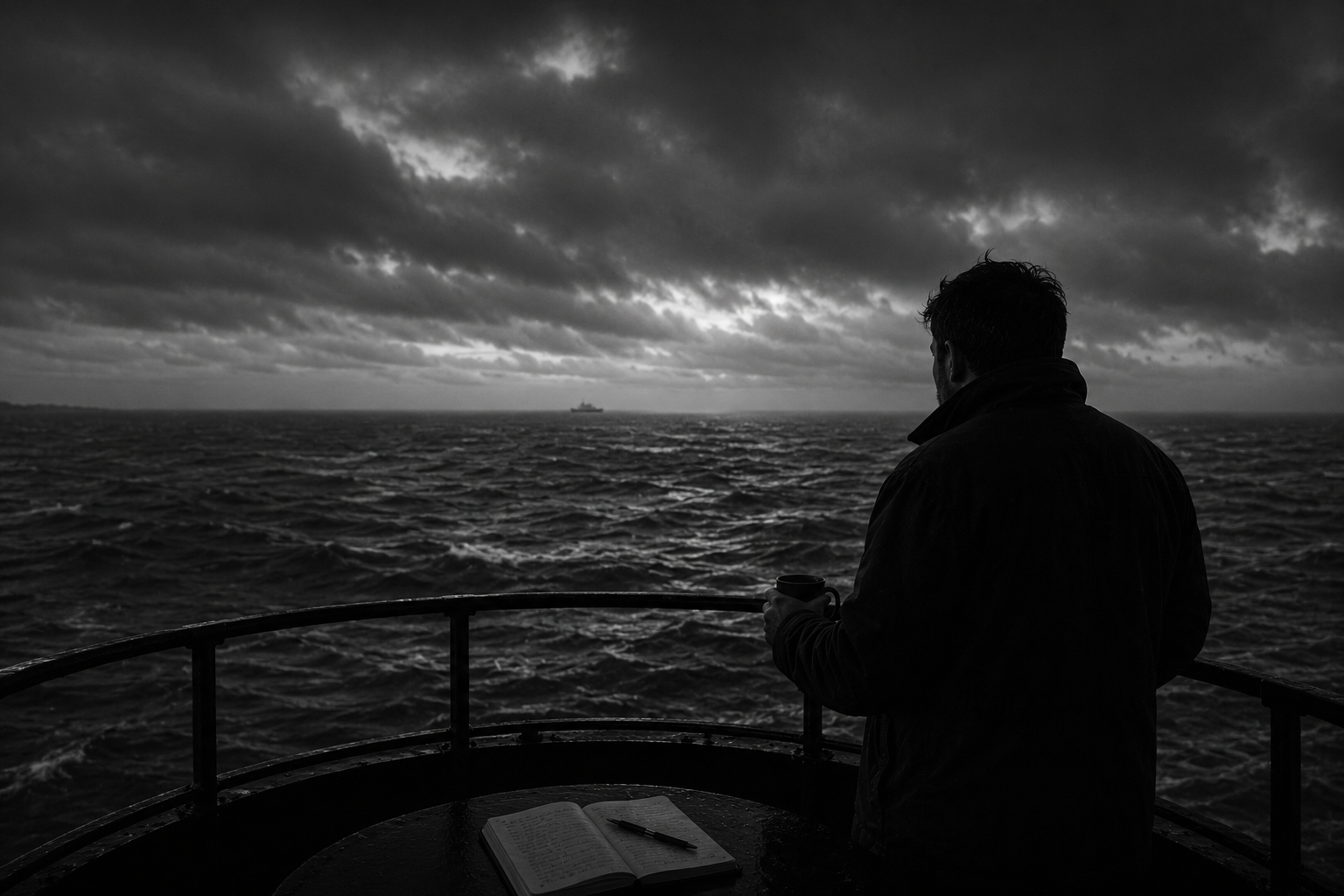
I watched it all from my lighthouse, coffee growing cold in my hands. And I thought: this is what happens when we stop treating signatures like ceremonies and start treating them like what they really are — decisions that need to move at the speed of crisis.
The Pattern Recognition Engine
I've been watching patterns for fifty years. The way pack ice forms. The way storms build. The way desperate ships ignore navigation warnings until it's almost too late. But artificial intelligence? It sees patterns I could never catch.
Last month, my nephew called from Copenhagen. His construction business had integrated what he called "predictive signing workflows." The AI studied eighteen months of his contracts and learned something remarkable: most of his documents followed predictable patterns. Change orders on Tuesdays. Subcontractor agreements before major material deliveries. Client approvals that always stalled at the CFO's desk unless submitted before noon on Thursdays.
"It's like having someone who knows my business better than I do," he told me. "The system prepares contracts before I realize I need them. Routes them based on who's actually available. Even adjusts the signing order when it knows someone's on vacation."
Documents closed faster. Fewer of them died in limbo. The time he used to spend chasing signatures went somewhere else entirely.
The Fraud Hunter
Out here on the North Atlantic, we have a saying: "Trust the ice you can see, fear the ice you can't." Document fraud is like black ice — invisible until you're already sliding.
Traditional signature verification relied on human eyes comparing squiggles on paper. Like asking someone to spot a submarine by watching for ripples. Sure, you might catch the obvious ones, but the sophisticated attacks? They slip through like fog through a net.
Modern AI examines signatures the way I examine the horizon — not just what's there, but what shouldn't be. Machine learning algorithms analyze thousands of subtle factors:
- The microsecond pauses between pen strokes
- The pressure variations invisible to human eyes
- The speed changes that occur when someone's concentrating too hard on copying
- The behavioral patterns unique to each signer — their typical signing times, devices, locations
The value isn't in being more suspicious. It's in being more observant, consistently, at three in the morning. A system that has learned a CFO never signs from a phone after 9 PM will flag the high-value transfer that arrives at midnight from a mobile device. A tired reviewer at the end of a shift will not.
The CFO was asleep in Copenhagen. The fraudster was in Jakarta.
The Universal Translator
You know what kills more business deals than disagreements? Misunderstandings.
I've listened to enough radio chatter to know that when a Norwegian captain says "soon" to a Danish crew and an Icelandic port authority, they're all thinking different timeframes. Language is precise until it crosses borders.
Document AI has become the universal translator for contracts. Natural Language Processing doesn't just read text — it understands context, intent, and implication. It can:
- Extract key terms from a 200-page contract in seconds
- Flag conflicting clauses that human reviewers routinely miss
- Identify risky language patterns that often lead to disputes
- Summarize complex legal documents in plain language
- Translate not just words but legal concepts across jurisdictions
A London law firm recently used NLP-powered contract analysis on a merger agreement. The AI identified 47 potentially problematic clauses that their senior partners had missed. Not because the lawyers were careless, but because the AI could hold the entire document's context in memory simultaneously, catching contradictions between page 3 and page 247.
The Efficiency Revolution
Here's what nobody tells you about automation: it's not about replacing humans. It's about freeing them from drowning in repetitive tasks so they can do what humans do best — think, create, and solve real problems.
The wins are unglamorous and they compound: automated reminders that fire without anyone remembering to send them, routing that skips the person who is on leave, fields pre-filled from data you already hold so nobody retypes an address and transposes two digits.
But here's the real magic: when the tedious work disappears, people suddenly have time to focus on what matters. Contract negotiators spend less time chasing signatures and more time crafting better agreements. Legal teams stop drowning in review queues and start preventing problems before they occur.
The Security Fortress
Every morning at 4 AM, I check the lighthouse's backup generators. Not because they fail often, but because when you're responsible for keeping ships off the rocks, redundancy isn't paranoia — it's protocol.
AI-powered document security works the same way. Multiple layers of intelligence watching for threats:
Behavioral Biometrics: The system learns how you sign — not just what your signature looks like, but how you create it. The angle you hold your phone. The pressure you apply to the screen. The natural rhythm of your hand movements. Forging a signature becomes like trying to forge someone's walk.
Anomaly Detection: AI continuously monitors for unusual patterns. A sales contract suddenly routed to a new email address. A signature attempt from an unrecognized device in an unexpected location. A document modified after initial approval. The system catches what humans miss when they're tired, distracted, or simply overwhelmed.
Predictive Threat Modeling: By analyzing millions of document transactions, AI can predict attack patterns before they fully materialize. Like watching storm systems form over the Atlantic, the AI sees threat signatures emerging and raises alerts before damage occurs.
The Integration Symphony
Modern businesses run on dozens of systems. CRM platforms. ERPs. Project management tools. Communication channels. In the past, moving documents between these systems was like running cargo between ships in rough seas — slow, dangerous, and prone to loss.
AI has turned this chaos into a symphony. Smart integrations don't just move documents; they understand context and adapt:
- A signed contract in Salesforce automatically triggers invoice generation in SAP
- Project milestones in Asana generate approval requests that route themselves based on budget thresholds
- Slack notifications adjust their urgency based on deadline proximity and signer history
- Email reminders personalize themselves based on recipient preferences and past response patterns
One logistics company integrated AI-powered signing with their supply chain management system. Result? What used to take 15 manual steps across 4 systems now happens automatically. Contracts signed at a warehouse in Hamburg trigger inventory updates in Shanghai and payment processing in New York. No human intervention required.
The Cost Liberation
My lighthouse runs on diesel generators and solar panels. Every drop of fuel costs money to ship here. Every replacement part takes weeks to arrive. You learn to eliminate waste not because it's virtuous, but because waste will bankrupt you.
Businesses hemorrhage money on document processing without realizing it. The hidden costs are everywhere:
- Storage and retrieval of physical documents
- Manual data entry and verification
- Chasing signatures through email threads
- Errors requiring rework and delays
- Lost deals due to slow processing
AI eliminates these costs systematically. One mid-size company calculated their true cost per traditional signature at $37 when accounting for time, errors, and storage. With AI-powered automation? $0.25 per signature, with near-perfect accuracy and instant retrieval.
That's not efficiency. That's liberation.
The Democratic Revolution
Here's what the enterprise software vendors don't want you to know: AI is democratizing capabilities that used to require million-dollar installations and teams of consultants.
Small businesses can now access the same intelligent document processing that Fortune 500 companies use. A freelance designer in Reykjavik has the same signature automation powers as a multinational corporation. The AI doesn't care about your company size — it just learns your patterns and optimizes your workflows.
This democratization is reshaping entire industries. Small law firms compete with established practices by processing documents faster. Startups close enterprise deals by moving at speeds their larger competitors can't match. The playing field hasn't just leveled — it's tilted toward whoever embraces intelligence over inertia.
The Future Beacon
The light from my lighthouse reaches twenty-one nautical miles on a clear night. Ships depend on it to navigate safely through waters that have claimed vessels for centuries. But the light only shows what is — not what will be.
AI in document signing is becoming prescient. It's learning to anticipate needs before they arise:
- Contracts that draft themselves based on historical patterns and current context
- Approval workflows that reorganize dynamically based on real-time availability
- Risk assessments that prevent problems rather than just detecting them
- Intelligent agents that negotiate standard terms without human intervention
We're approaching a world where the signature becomes almost incidental — a final confirmation of decisions the AI has already optimized, risks it's already mitigated, and processes it's already streamlined.
The Human Element
But here's what the technologists sometimes forget, sitting in their warm offices with their stable internet connections: at the end of every document is a human decision. A commitment. A promise.
AI doesn't replace the human element — it amplifies it. By eliminating the friction, the tedium, the uncertainty, AI lets humans focus on what matters: the relationship, the negotiation, the creative solution to a complex problem.
When that captain on the Northern Promise signed the salvage agreement, he wasn't thinking about the AI routing his document. He was thinking about his crew, his cargo, his responsibility. The technology simply made his decision count when it needed to.
The Lighthouse Keeper's Wisdom
I've spent five decades watching the sea from this lighthouse. I've seen wooden ships give way to steel, sextants replaced by GPS, and now AI transforming how we make agreements. Each innovation was met with skepticism. Each one proved essential.
The organizations that thrive won't be those that resist AI in document signing — they'll be those that embrace it as a force multiplier for human intelligence. They'll use pattern recognition to spot opportunities others miss. They'll deploy fraud detection to build trust in digital relationships. They'll harness automation to move at the speed of modern business.
Most importantly, they'll remember that behind every algorithm is a human need: to agree, to commit, to move forward without drowning in process.
The storm that threatened the Northern Promise has passed. The sea is calm tonight, and my light sweeps steadily across the dark water. Somewhere out there, contracts are being signed, agreements are being honored, and business is moving forward at the speed of thought.
That's not the future of document signing. That's the present — for those brave enough to embrace it.
Stay warm. Stay alert. And never underestimate the power of intelligence, whether artificial or otherwise, to guide you through the storm.
— Gilberto Mares Keeper of Kråkeholm Light 67°14'38.9"N 31°41'29.4"W